Kombucha has become one of the most popular beverages in recent years, but its origins date back thousands of years in Asia. Known as “the tea of immortals,” this fermented infusion made from sweetened tea, bacteria, and yeast has captured the interest of nutritionists, foodies, and people seeking natural alternatives for well-being. In this article, we will take an in-depth look at what kombucha is, how it’s made, the benefits attributed to it, and the precautions to keep in mind before adding it to your daily routine.
1. What is kombucha?
Kombucha is the result of fermenting tea (usually green or black) sweetened with sugar and a symbiotic culture of bacteria and yeasts, known as a SCOBY (Symbiotic Culture Of Bacteria and Yeasts). During this fermentation process, the yeast converts the sugar into alcohol and carbon dioxide. Then, the bacteria transform part of that alcohol into organic acids that give the beverage its characteristic slightly acidic, effervescent flavor.
Summary of the brewing process:
Prepare the tea and dissolve sugar.
Add the kombucha “mother” (SCOBY) to the infusion.
Ferment at room temperature (68–82 °F / 20–28 °C) for 7 to 14 days, or longer, depending on the desired flavor.
Remove the SCOBY, bottle the kombucha, and allow it to carbonate (secondary fermentation) for a few additional days if you want more fizz.
Featured reference:
Teoh AL, Heard G, Cox J. (2004). Yeast ecology of kombucha fermentation. International Journal of Food Microbiology. [PMID: 15145507]
Brew your own kombucha at home!
Get a high-quality SCOBY starter culture and start fermenting your own probiotic-rich tea—order now here
2. Main components of kombucha
Throughout the fermentation process, various bioactive compounds are generated, attracting the attention of the scientific community:
Organic acids: Acetic, lactic, gluconic, and others, which provide antimicrobial properties and may aid digestion.
Bvitamins: In small amounts, kombucha can contain certain vitamins such as B1, B6, and B12, resulting from microbial activity.
Polyphenols: Derived mainly from tea (green or black), they contribute to the beverage’s antioxidant activity.
Probiotics: The bacteria present in the SCOBY can function as probiotics when they reach the intestine, helping maintain a balanced microbiota.
Featured reference:
Vīna I, Semjonovs P, Linde R, Deniņa I. (2014). Current evidence on physiological activity and expected health effects of kombucha fermented beverage. Journal of Medicinal Food. [PMID: 25348478]
3. Attributed benefits of kombucha
Although research on the effects in humans is limited, some in vitro and animal model studies suggest the following possible benefits:
3.1. Digestive support
The presence of beneficial bacteria and yeasts (probiotics) and the presence of organic acids may:
Balance intestinal flora: Helping combat pathogenic bacteria and promoting a healthy environment in the digestive tract.
Enhance nutrient absorption: Improving gastrointestinal health and metabolism.
3.2. Antioxidant potential
Thanks to the polyphenols in tea and other compounds produced during fermentation, kombucha demonstrates:
Antioxidant activity: Which may help counteract oxidative stress and cellular aging.
Protection against cellular damage: By reducing the activity of free radicals.
3.3. Possible antimicrobial action
Organic acids (especially acetic acid) have antimicrobial properties that could help inhibit the growth of certain harmful microorganisms. This has led to studies on the use of kombucha as:
A natural preservative: In food products to extend shelf life.
Oral health support: Against bacteria involved in cavities and gum problems (in preliminary studies).
3.4. Energizing effect
Some people report feeling a slight “energy boost” when they drink kombucha, possibly related to:
B vitamins: Involved in the cellular production of energy.
Small traces of caffeine: Especially if the kombucha is made from black or green tea.
Support your digestion and relax with every sip!
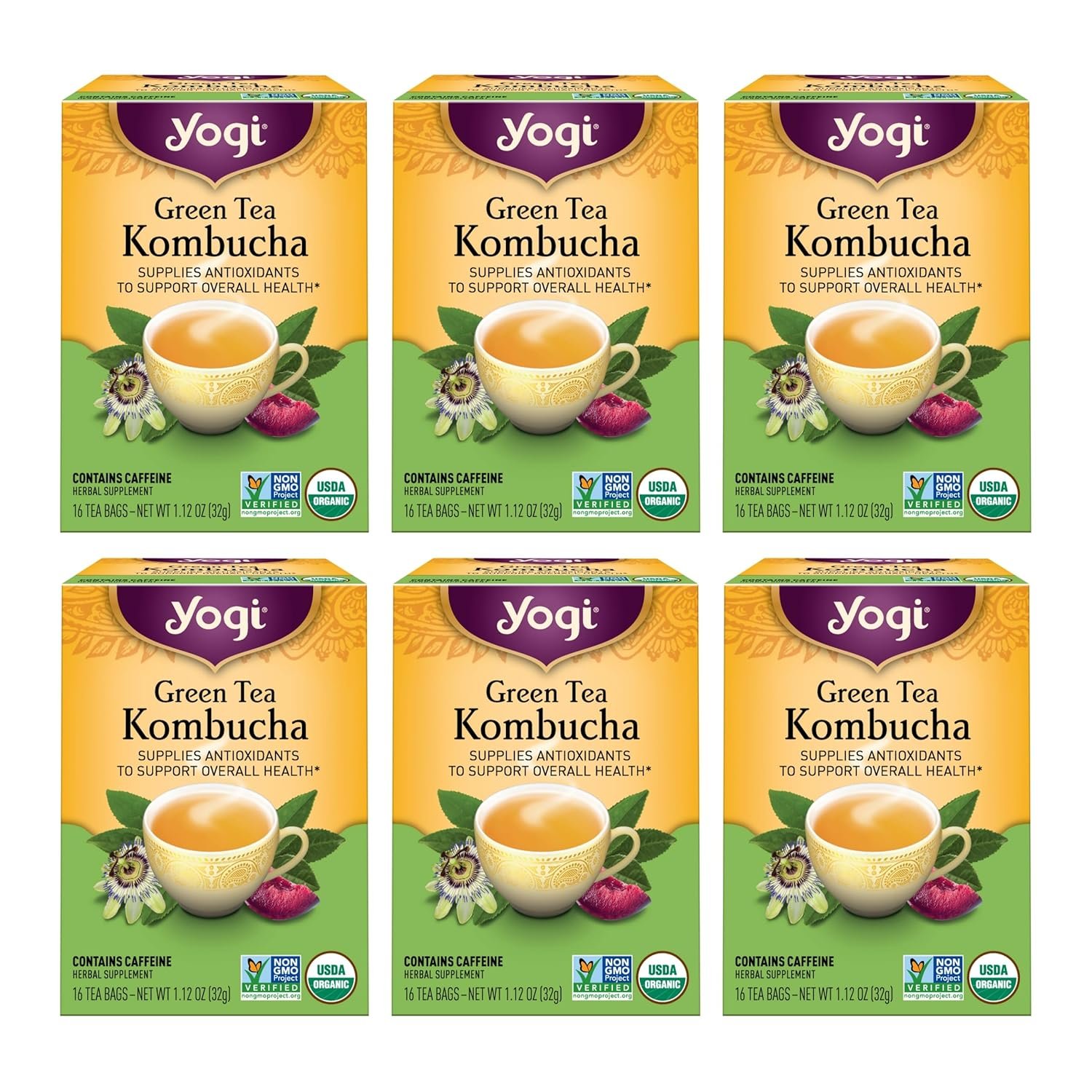
This herbal Yogi Tea blend gives you the benefits of kombucha without the buzz—get it here
4. How to consume kombucha and recommendations
Kombucha is available in health food stores, supermarkets, and can also be made at home with the proper supplies. For those looking to introduce it gradually:
Start with small portions (for example, 100–150 ml per day).
Observe how your body reacts during the first few weeks.
Gradually increase the amount up to a maximum of 1–2 glasses a day if there is no discomfort.
Consumption suggestions:
Before or after meals: To aid digestion.
Between meals: As a refreshing, low-calorie alternative (compared to conventional sugary drinks).
On an empty stomach: Some people believe it intensifies the probiotic effect, although this depends on individual tolerance.
5. Possible risks and precautions
While kombucha is generally safe for healthy individuals, it’s important to keep a few points in mind:
High acid content: Excessive consumption can erode tooth enamel or cause stomach upset, especially in those with gastritis or ulcers.
Residual alcohol: Fermentation produces small traces of alcohol (usually less than 0.5%), a factor that pregnant women, children, or those sensitive to alcohol should consider.
Contamination: Making kombucha at home requires strict hygiene. Otherwise, it could become contaminated with mold or harmful bacteria.
Interactions: People taking medications, those with a weakened immune system, or individuals with chronic conditions should consult a doctor before adding kombucha to their diet.
Featured reference:
Greenwalt CJ, Ledford RA, Steinkraus KH. (1998). Kombucha, the fermented tea: microbiology, composition, and claimed health effects. Journal of Food Protection. [PMID: 9708300]
Save money & reduce waste!
Make endless batches of kombucha, yogurt, or fermented foods at home—get your high-quality fermentation jar here
6. Homemade kombucha brewing: key steps
For those who want to embark on the adventure of making kombucha at home, here are the basic steps:
Rigorous hygiene: Thoroughly wash utensils and hands to reduce the risk of contamination
Prepare sweetened tea: Use quality black or green tea and white sugar (the bacteria process common sucrose best).
Cool and add the SCOBY: Once the tea is lukewarm, introduce the SCOBY along with a little already-fermented kombucha as a “starter.”
Ferment for 7 to 14 days: Cover the mouth of the container with breathable cloth and place the mixture in a dark spot at room temperature.
Taste and bottle: When it reaches the desired flavor (slightly sour, with a sweet and effervescent touch), remove the SCOBY and bottle it.
Tip: During fermentation, a “new layer” of SCOBY will form on the surface. You can use it to make more kombucha or share it with friends.
7. Conclusions
Kombucha has generated a lot of interest thanks to its unique mix of tart, bubbly flavor and its purported benefits. Although science is still examining many of its effects, there’s no denying its popularity as an alternative fermented beverage, rich in bioactive compounds and featuring an interesting nutritional profile.
If you decide to try it, do so gradually and choose high-quality options. If you’d rather make it yourself, ensure a clean environment and carefully follow the fermentation process. In the end, kombucha can become a pleasant refreshment and a potential ally for your digestive health, always within a balanced diet and a healthy lifestyle.
References
Teoh AL, Heard G, Cox J. (2004). Yeast ecology of kombucha fermentation. International Journal of Food Microbiology.
Vīna I, Semjonovs P, Linde R, Deniņa I. (2014). Current evidence on physiological activity and expected health effects of kombucha fermented beverage. Journal of Medicinal Food.
Greenwalt CJ, Ledford RA, Steinkraus KH. (1998). Kombucha, the fermented tea: microbiology, composition, and claimed health effects. Journal of Food Protection.
Marsh AJ, O’Sullivan O, Hill C, Ross RP, Cotter PD. (2014). Sequence-based analysis of the bacterial and fungal compositions of multiple kombucha (tea fungus) samples. Food Microbiology.
Jayabalan R, Malbaša RV, Lončar ES, Vitas JS, Sathishkumar M. (2014). A review on kombucha tea—microbiology, composition, fermentation, beneficial effects, toxicity, and tea fungus. Comprehensive Reviews in Food Science and Food Safety.